



Betting tools like our overround calculator allow you to quickly determine the margin the bookmaker is charging on any two or three-way market. It’s vital you familiarise yourself with how they work, as it’s one of the best indicators of whether a bookmaker is offering value or not. We’ve created this guide to walk you through how to use it and why understanding that overround is a necessary evil, but one that can be limited with a bit of time and research.


How to Use the Overround Calculator
To kick things off, we’re going to show you how our overround betting calculator works. It’s really simple to use, but we want to highlight some key features so you can get the most out of it.
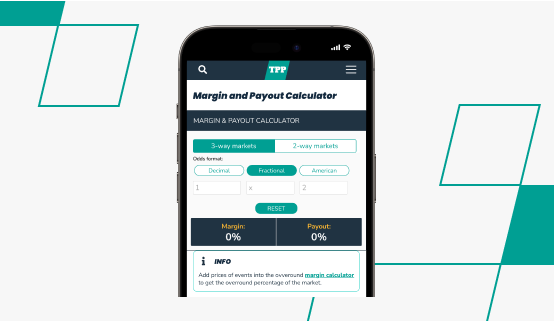
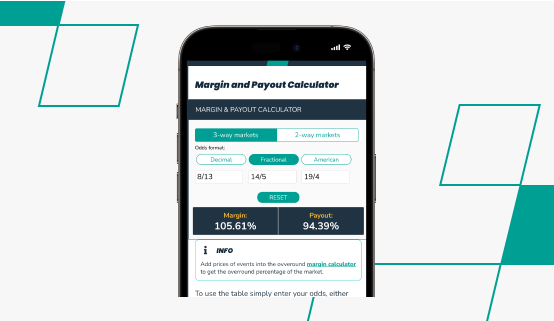
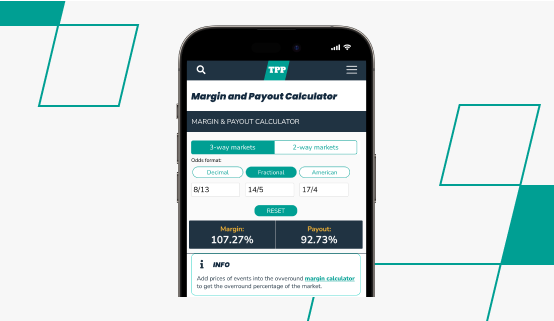
It’s imperative that you compare overround for different bookies. This is the same market, but with BetVictor, showing an increase to 107.27%.
What Is Overround?
To break it right down, overround is the bookie's profit margin. It’s how they make money, essentially. They price markets in their favour to guarantee a profit instead of giving the punter what would be the true odds for that market.
They create an implied probability for each result and then take a little away. For example, a coin flip is a 50/50 scenario, so the true odds would be even money. But if there’s £1,000 bet on heads and £1,000 bet on tails, the bookies make no money. If they alter it slightly to say 10/11 for both outcomes, this gives them a small margin, allowing them to make a small profit from both results.
If you want to get technical, the formula would be:
-

(sum of implied probabilities – 100) = overround
So, when we talk about implied probability, we mean the likelihood of all possible events occurring. If we jump back to that coin toss and we take the adjusted odds of 10/11, this gives us a 52.4% implied probability. There are two results (heads or tails), and these must be combined for the total. It should look something like this:
-
Heads at 10/11 (52.4%) + Tails at 10/11 (52.4%) = 104.8% – 100% = 4.8%
As you can see, the overround explainer has shown us that the margin here is 4.8%. It’s key to note that the lower the overround, the closer the market is to true odds.

Why Bookies Have a Margin Built In
Bookmakers are businesses. They must eat and make a profit so they can continue to trade. The overround allows them to do this, covering risk by balancing markets. It means that they’re rarely overexposed, so they can take multiple small gains and make a profit. For us punters, it’s the cost of doing business.
When to Use the Overround Calculator
The short answer to this is: always. We’re blessed with dozens of brilliant online bookies these days, and competition means that, just like our significant others on a weekend, we can shop around for the best deals. Below, we’ve highlighted a few scenarios where using an overround calculator is beneficial.
Pre-Match Markets
The beauty of pre-match markets is that we have time on our side to use overround betting strategies to our advantage. We can compare the odds across multiple bookies, run them through our calculator and see who has the lower margin.
Remember, the lower the margin, the less the bookies are making and the more value we’re getting from our bets as we’re closer to the true odds for that market.
In-Play Betting
Odds for in-play betting move much quicker than pre-match, so you need to be on your game to take advantage. The upside of this is that inefficiencies in the odds are more common, but the downside is that margins can be inflated to counter this. The best way to overcome this is to create theoretical movements in the odds and react accordingly.
For example, if a footie match is 0-0 after 20 minutes in a pretty dull game, you can use the overround calculator and see the current margins for the match result. But, at the same time, anticipate where the odds will move if a goal is scored. Those initial few seconds following a goal are when the odds are most volatile, before they even themselves out. If you already know where you need the market to be to hit certain margins, you’re one step ahead and can take advantage of increased value.
Best Markets to Use the Overround Calculator On
Match results are usually a great indicator of the general odds structure for a bookie. They are by far the most popular market, so you can use the calculator to see margins, which, more often than not, set a precedent for the rest of the site.
Next are multi-outcome markets, such as correct score. Given there are so many variables, overrounds can be eye-wateringly huge. We’re talking 120%+ here, folks, so make sure you’re not getting crushed with these. And finally, horse racing win markets. Again, there’s often lots of runners, so bookies bake in huge margins. Do your homework, and the numbers will tell you where to bet.
Overround Calculator Pros & Cons
- Helps you quickly and decisively see which bookies have the lowest margins, which means the maximum value for the punter
- Allows you to avoid markets that are overpriced and offer poor returns (anything over 110% is considered to be “poor”)
- Brilliant as a long-term strategy that reduces the bookmaker's edge and increases profitability (ROI)
- Allows you to build custom markets with odds from different bookies, and arbitrage is when the overround drops below 100%
- Can be used across all sports and betting markets
- Low overround doesn’t always mean profitable odds, and value still depends on true probabilities
- Can be time-consuming to use if you’re betting in-play, where markets are constantly moving
- Doesn’t factor in form, injuries, stats and context, so must be used alongside proper research
Our Full Suite of Free Betting Calculators
We’ve not just got you covered for overround betting, but we’ve also got tons of other betting calculators and tools that you can use as part of your arsenal. Check them out below:

ThePuntersPage Final Say
If you’re not using an overround calculator, then you need to start. It’s the best way to see if you’re getting ripped off by the bookies and overpaying for odds that you can get better elsewhere. Think of it like shopping; if you’re buying a new car, you check the market to see if the dealer has it listed at fair market value and we’re basically doing the same with our odds. Overround is something that we as punters can’t avoid, but we can limit, and the calculator helps us do exactly that.
Overround Calculator FAQs
Overround is the profit margin that a bookmaker takes from the market. This will be a percentage (over 100%) based on the implied probability of the true odds, allowing them to make money regardless of the result. Think of it as the cost of doing business for placing a bet.
Overround in horse racing refers to the margin applied to the odds for a particular race. The bookies add the margin to the odds of each horse and combine to form a percentage over 100%, which signifies their profits.
No, margins will vary on most markets across all bookies. The margin will depend on the exposure and the amount wagered on each result, determining its significance.
You start by choosing the number of possible results and then enter the odds for each into the calculator. It will then calculate those odds and display a percentage of the total margin based on the odds. Any number over 100% is the bookie's overround (profit) for that market.